Home Networking, Technology - by Jeff - March 3, 2014 - 00:31 Etc/GMT+5 - Be first to Comment!
In pursuit of home network bliss, I have moved on to step 2.
Step 1: Managed network switch – Netgear GS108Tv2 switch will allow setup of multiple VLANs for managing network traffic.
Step 2: Small PC to setup as a firewall / router – Jetway Quad Lan / Fanless Case (don’t forget to add a small SSD harddrive)
Step 3: Install and Setup PFSense as the firewall software / OS
Now here is where the trouble begins: the Google Fiber Network box can’t be put into bridge mode… so it looked like the only answer was to double NAT, not a good solution…. until this came along: Full Story
Technology - by Jeff - February 24, 2014 - 09:26 Etc/GMT+5 - Be first to Comment!
Spent a good part of my weekend improving our online security. One big part of this improvement was to tighten up some of my online accounts. We have all seen the new stories of the massive data breeches, the stolen credit card data, the big hacks & wide scale identity theft. And while we need to be careful, there is not a lot we can do with our data that other people have. But what we can improve is the security of the small things. Full Story
family, Home Networking, Technology - by Jeff - February 23, 2014 - 15:15 Etc/GMT+5 - Be first to Comment!
So Google fiber is here, you would think that would be enough. But consider our crowdedhouse. Our network not only serves our family (which admittedly is larger than average, ranging between 9 and 11 people depending on the day, your definition of family and my general attitude), but the network also serves our carriage house apartment, 3 guest rooms being used by long and short term guest and whoever is couch-surfing in the basement at the time. Add up all these users and all their devices plus the odd server or six we tend to run, and we have 25-35 devices on the network at any one time. Supporting this network has become quite the job.
Full Story
Articles, Media, Stewardship, Technology - by Jeff - May 27, 2011 - 16:59 Etc/GMT+5 - Be first to Comment!

In general, we have found that the median life cycle of audio equipment is around 10 years. Some pieces will last longer, others will require maintenance or refreshing to continue to perform to specs and some things will need replaced much sooner. Environment, handling and maintenance, and materials and workmanship directly affect longevity of components. Indirectly, the experiences and expectations of people effectively shorten product efficacy.You could call this the “inside, outside, upside down” theory of life cycle of audio systems.
Stewardship, Technology - by Jeff - February 23, 2011 - 01:54 Etc/GMT+5 - Be first to Comment!
During our last move we left behind a spotlight that had been used for a college touring choir since 1976. It was a used donation when they got it, and it was still being used for special productions in a technologically geriatric setting [stored under risers and used once a year] at a large Baptist church. In finance circles, there has long been a mantra that leasing is not good stewardship. People want to own homes, not lease, to build equity. Buying a car, not leasing, is said to be less expensive in the long run. So why would I promote leasing equipment? You do want to purchase the durable workhorse whose technology remains steady- predictable and reliable. Things susceptible to needing upgrades and becoming outdated should be leased. Here are four points to consider when deciding to buy or lease equipment. Full Story
Articles, Excellence in the Arts, Stewardship, Technology - by Jeff - January 25, 2011 - 13:55 Etc/GMT+5 - Be first to Comment!
If technology used in the church is of poor quality (in the eyes of those attending), it will tend to reflect poorly on the message, evening cheapening the message. If the technology is too glitzy and fancy (again, in the eyes of those attending), it will make the message feel more like a story, entertainment, even fantasy. We want to get the right system into the right church to give the right message while recognizing that the real question being asked is, “But, how can we make the most of available resources?”
Full Story
Excellence in the Arts, Technology - by Jeff - March 3, 2010 - 17:58 Etc/GMT+5 - 1 Comment

The acoustics of a space affect the ability to understand speech clearly (intelligibility), the blends of the sounds as they are mixed, sound captured and recorded, and the perceptions of the music quality. All these elements of the sound are important in a worship environment. A definition of room acoustics includes the size and shape, the construction and finish, and what is in and out of the room. Because requirements vary for each room and its own purpose, acoustics needs to start with a facility still in the planning stages. Acoustic Engineering will typically focus on three variables: controlling background noise, creating noise isolation, and designing the acoustical environment. Full Story
Projects, Technology - by Jeff - November 4, 2009 - 08:20 Etc/GMT+5 - Be first to Comment!
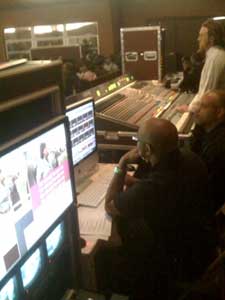
Any time of the year, your tech team is busy planning on, preparing for or producing an extra service. Easter and Christmas tend to be the first bigger productions a tech team will have on a schedule, but the calendar is full of events that are outside of the normal weekly worship. Concerts, outreaches, conferences, VBS, holidays, awards, celebrations and facility rentals; each of these events requires additional planning, preparation, equipment, and crew. How can your creative, tech and media teams support these events, make them extraordinary, and yet endure well on the week to week support of the ministry? As a Media Ministry, we’ll define the purpose, put proper time into planning, and then systematically check each medium in place to support the event. Full Story
Media, Technology - by Jeff - September 25, 2009 - 17:03 Etc/GMT+5 - 1 Comment

When discussing Media Ministry, we often get hung up on how to use technology and media better in our worship services, which is a very limited part of our life as a Christian. Each media / tech ministry has slightly different missions & goals, but in general we seek to help others minister through the use of technology and media, to spread the gospel beyond our abilities to do so in person and to lift up Christ in the arts and creativity. So let’s step outside the box of the worship center and look at, how a church can use technology outside the worship services and how our media ministries can support those endeavors. Full Story
Excellence in the Arts, Technology - by Jeff - August 17, 2009 - 17:15 Etc/GMT+5 - Be first to Comment!

I read this blog post (Church Planters: Stop Wasting God’s Money) by Bob Thune this morning and I can say I completely agree with him. Yet- I also feel there is more to it that applies to more than just church planters. The people who make up the church often buy into marketing hype. They purchase goods and services they don’t really need. This side of the story is just as wasteful and probably more prevalent in the church. Full Story